
Career AdvancementCareer Cushioning Explained: Why Professionals Are Quietly Preparing Exit Plans
Resume Writing, Career Advancement
The "Resume Illusion": How to Prove Your Skills in the Age of AI-Generated CVs
Reading time 12min
You have probably seen the trend by now. Job applications are being flooded with flawlessly written resumes polished by AI. According to Robert Half’s March 2026 survey of hiring managers, 65% say AI-generated resumes are making hiring harder and slowing the process, with some reporting delays of up to two weeks. On average, job openings now receive 242 applications.
On paper, every candidate appears to be a world-class strategist, a master communicator, and a top-tier performer. But as we move through 2026, this has created a massive problem for both sides of the hiring table. If everyone’s resume looks perfect, the resume itself starts to lose its value.
Recruiters across Europe are becoming increasingly skeptical. They know that a beautifully crafted paragraph about "strategic leadership" could have been generated in five seconds by a chatbot. To secure a great role today, you need to go beyond the document. You have to break the "Resume Illusion" by shifting your strategy from making claims to providing undeniable proof.
In this post, we will explore how the hiring process has changed for professionals in every field. We will look at how you can demonstrate your actual abilities through tangible evidence, behavioral storytelling, and the kind of authenticity that an algorithm simply cannot replicate.
The Trust Gap in Modern Hiring

For a long time, the secret to a successful job search was "beating the system." If you could get your CV past the automated filters, you were halfway there. Today, the system has been beaten so thoroughly that it has changed. Companies are seeing a surge in "ghost-written" applications that do not always match the actual capabilities of the candidate.
This has led to a significant trust gap. When a hiring manager looks at your profile, their first thought is often a question: "Did they actually do this, or did they just prompt an AI to say they did?" This skepticism means the initial screening is no longer just about your qualifications. It is about your credibility.
If you want to build trust immediately, you must avoid generic summaries. Instead of saying you are "a highly motivated sales professional," you should describe the specific market conditions you faced and the exact percentage by which you grew your territory. The risk of résumé padding or inauthenticity has made recruiters much more attentive to the details that feel real.
Beyond the Bullet Point: Creating "Proof of Work"

In the past, portfolios were mostly for developers, designers and architects. In 2026, every professional needs a "proof of work" mindset. Whether you are in HR, finance, marketing, or operations, you need a way to show what you have built or managed.
Think about the tangible outputs of your career. If you are a project manager, this could be a redacted project timeline that shows how you handled a major delay. If you are in customer success, it might be a series of testimonials or a case study on how you reduced churn. These are not just lines on a page. They are evidence.
A strong collection of real-world examples sets you apart from the sea of AI-generated text. Even if your field is not technical, the concept remains the same. You are moving from "trust me" to "let me show you." When you can point to a specific challenge, the steps you took, and the final result, the Resume Illusion disappears.
The Rise of the Behavioral Assessment

Because resumes are becoming less reliable, the interview process has become much more rigorous. Companies are leaning heavily into behavioral interviewing to see how you think and act in real-time. They are looking for the human experience that sits behind the professional title.
You can expect interviewers to ask deeply situational questions. They want to hear about your failures as much as your successes. Why? Because an AI can easily write a success story, but it is much harder to fake the nuanced emotions and lessons learned from a difficult professional mistake.
To prepare, you should develop a library of stories that showcase your transferable skills. Focus on moments where you had to use your judgment, resolve a conflict, or adapt to a sudden change. These stories are your best defense against the suspicion of being "over-polished." They prove that you have lived the experience you are claiming on your CV.
Mastering the 15-Minute Human Test
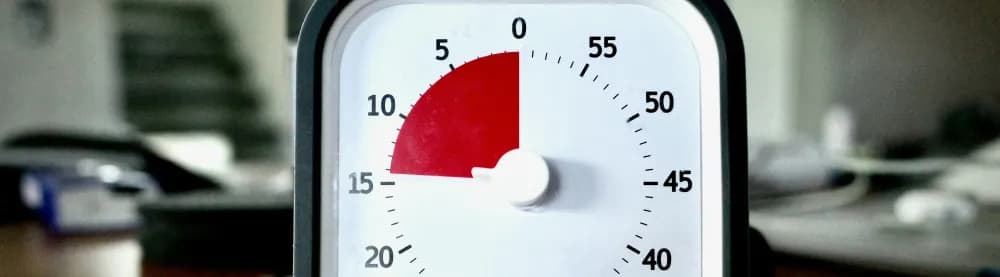
The first few minutes of a conversation are now more critical than ever. Recruiters often use this time to perform a "sanity check." They are comparing your verbal communication and energy to the persona presented in your application. If there is a massive disconnect between your polished resume and your ability to discuss your work, the interview will likely end early.
This is where your interview secrets and preparation come into play. You need to be able to talk about your work with a level of depth that a chatbot cannot reach. This means knowing your numbers, understanding the "why" behind your company’s strategy, and being able to explain complex ideas in simple terms.
Authenticity is your greatest competitive advantage. If you try to sound like a textbook, you will sound like an AI. If you speak like a person who is passionate about their craft and honest about their journey, you will create a connection that no automated tool can mimic.
Why Authenticity is Your Best Asset

In a world of perfect digital copies, the "unpolished" truth can be incredibly refreshing. This does not mean you should be unprofessional. It means you should be real. When an interviewer asks a tough question, it is better to take a moment to think and give a thoughtful, honest answer than to provide a generic, rehearsed response.
Being transparent about your strengths and areas for growth shows a level of self-awareness that is highly valued in modern workplaces. In 2026, companies are not just hiring for skills. They are hiring for culture fit and the ability to learn. An AI can tell a recruiter what they want to hear, but only a human can show them who they actually are.
By embracing this transparency, you build a foundation of trust that carries you through the entire hiring process. You move from being just another name in a database to being a person a team actually wants to work with every day.
From Paper to Practice
The resume is not dead, but it has changed its purpose. It is no longer the final word on your expertise. It is simply the ticket that gets you into the room. Once you are in that room, the "Resume Illusion" must fall away to reveal the capable, authentic professional underneath.
By focusing on tangible proof, deep storytelling, and genuine human connection, you will find that the rise of AI does not make your job search harder. Instead, it makes your unique human value even easier to see.
Q&A: Proving Your Worth in a New Era
Q: If everyone is using AI, will I look "old fashioned" if I don't use it for my CV?
A: Not at all. Using AI for structure and clarity is smart. However, the content must be yours. A resume that is clearly written by a human often stands out more because it has a personality and a flow that AI usually lacks. Use the tools for assistance, but keep yourself as the author.
Q: How can I provide "proof of work" if my job is confidential or involves sensitive data?
A: You do not need to share secrets to show expertise. Focus on the methodology. Explain the framework you used to solve a problem or the specific steps you took to manage a team. You can use "Company X" and "Product Y" while still giving a detailed account of your actions and the results.
Q: Are traditional interviews being replaced by work simulations?
A: In many industries, yes. Companies are increasingly asking candidates to perform a "trial task" or a presentation. Whether it is a sales pitch or an HR strategy plan, these simulations are the best way to prove you can do the job. Approach these as an opportunity to show your skills rather than as a hurdle.
Q: How do I handle a recruiter who seems skeptical of my achievements?
A: The best way to handle skepticism is with data and detail. If someone doubts your results, walk them through the timeline. Mention the names of tools you used, the specific obstacles you overcame, and the feedback you received from stakeholders. Detail is the natural enemy of doubt.
Author

Antonio Aguilar Geronazzo
Marketing Manager - TieTalent
As the Marketing Manager at TieTalent, Antonio Aguilar is known for his adaptability and innovative approach. Having spent over 20 years in various industries, he contributes a broad spectrum of valuable insights. Antonio’s deep understanding of diverse markets and consumer needs enables him to create fresh and effective marketing strategies. He excels in combining his expertise with real-world insights to create marketing approaches that are not only effective but also genuinely connect with people. His articles, recognized for their insightful information and reliable references, have been key in forging strong relationships with diverse clients and audiences.