
Career AdvancementCareer Cushioning Explained: Why Professionals Are Quietly Preparing Exit Plans
Career Advancement, Tech Industry
From Code Writer to AI Director: How Tech Professionals Can Reinvent Themselves in 2026
Reading time 10min
The short version: AI coding agents have crossed a threshold. They're no longer tools that make developers faster, they're systems that can execute entire projects autonomously. The developers thriving in this environment aren't the ones writing the most code. They're the ones who know how to direct AI effectively: defining objectives, evaluating output, and making the judgment calls that machines still can't. Here's what that shift looks like in practice, and what to do about it.
The Role Has Already Changed. The Job Description Hasn't Caught Up Yet.

For the past few years, AI tools made developers faster. Copilot autocompleted lines. ChatGPT helped with boilerplate. It was powerful, manageable, the engineer was still driving.
That's no longer quite true.
Today's AI coding agents don't just autocomplete. They understand your entire codebase, plan multi-file changes, write tests, debug failures, and iterate until something works, with little human input. GitHub Copilot's agentic version created over one million pull requests between May and September 2025 alone. Devin, the autonomous coding agent by Cognition Labs, now correctly resolves nearly 14% of real-world GitHub issues end-to-end, compared to under 2% for the previous state of the art. That's a 7x leap in under a year.
The practical effect? Junior-level coding tasks (CRUD endpoints, bug fixes, scaffolding, documentation) are increasingly being handled by AI. Entry-level hiring at the 15 largest tech firms dropped 25% from 2023 to 2024 and is now down more than 50% since 2019, with further declines expected.
But here's what the doom-scrolling misses: senior engineers, system thinkers, and those who know how to direct AI rather than compete with it are in higher demand than ever. The skill set that makes someone valuable has shifted. Not disappeared.
What Does "Directing AI" Actually Mean for Developers?

Directing AI means taking responsibility for what gets built and why, while delegating the how to autonomous agents. It combines system design, product judgment, and critical evaluation of AI output into a role that is less about writing code and more about making decisions.
There's a phrase circulating in engineering circles right now: developers are becoming agent managers. In practice, that means defining the objective, structuring the problem, reviewing the output, and deciding what gets shipped. The AI is a tireless executor. The developer is the one with judgment, which turns out to be the harder thing to replicate.
This requires a different set of skills than most job descriptions currently ask for.
System design over syntax. When AI handles implementation, what matters is the ability to architect systems: understanding how components interact, where failure points live, how trade-offs affect scalability. A developer who can design is worth ten who can only write.
Product thinking as a baseline. The most sought-after engineers in 2026 connect technical decisions to business outcomes. Why does this feature matter? What happens to the user experience if we cut this corner? These questions were once optional for developers. Now they're table stakes, especially at startups, where AI productivity gains mean smaller teams wearing more hats.
AI fluency, not just AI familiarity. Using Copilot to autocomplete is not AI fluency. Knowing how to prompt an agent well, validate its output critically, structure multi-agent workflows, and catch the subtle mistakes AI makes: that is. And the market is already pricing it in. Entry-level AI-focused roles are paying $90K-$130K compared to $65K-$85K for traditional development positions.
Which Developer Skills Are Most Valuable in 2026?

The market is already sorting this out. Some skills are compounding in value. Others are quietly becoming commoditised.
Rising in value:
- Agent orchestration and prompt engineering for code generation
- Security review of AI-generated code (a genuine and growing gap that almost nobody is talking about clearly yet)
- Cross-functional collaboration, translating business needs into precise technical specifications
- Technical leadership: mentoring, code review, architectural decision-making
- Understanding of AI model limitations, hallucination patterns, and when not to trust the output
Fading in value:
- Being a "language polyglot" or stack specialist for its own sake
- Prototyping speed as a differentiator (AI closes that gap fast)
- Pure execution roles with limited ownership or judgment required
None of this means these skills become worthless overnight. It means the ceiling for relying on them exclusively is getting lower, and faster than most people expected.
If you're mapping your current strengths to what's rising, the upskilling vs reskilling framework on the TieTalent blog is a useful place to start. The distinction between sharpening what you have versus pivoting to something new matters a lot when deciding where to invest your time.
This Isn't New. But the Speed Is.
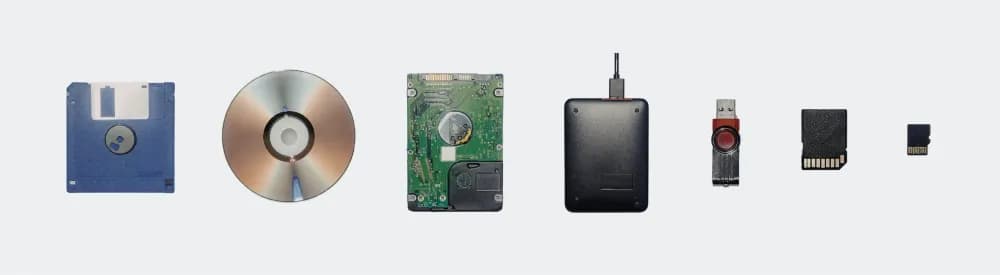
Every major technology shift has produced this kind of anxiety, and every time, the profession adapted. When cloud infrastructure arrived, it didn't eliminate engineers. When high-level languages replaced assembly, the developer workforce didn't shrink. It grew.
The pattern here is probably similar. When the barrier to building software drops, more software gets built. The market expands. But the shape of the jobs changes, sometimes faster than people can retrain.
What's different in 2026 is the pace. Previous transitions gave the industry years to adjust. This one is moving on a timescale of months, sometimes weeks. The developers who feel most secure right now are those who started treating AI as a collaborator early, who built projects with it, who developed an instinct for where it excels and where it quietly hallucinates.
The developers who feel most anxious are often technically excellent in the traditional sense but haven't yet made the mental leap from coder to director. That leap is available to almost everyone. It's a mindset shift as much as a skill shift. But it requires something deliberate, and many are still waiting for the right moment to start, which is itself a version of the problem.
The career change roadmap on TieTalent has practical steps worth reading for anyone considering a more significant pivot, whether that's into AI engineering, ML, or a technical leadership track.
Where to Start: Three Moves Worth Making Now

No need to rip up your career plan. Extend it.
1. Build something with AI agents, not just AI assistants. The difference matters. An assistant reacts to prompts. An agent pursues a goal. Set up Claude Code, Cursor, or a similar tool and give it a real project, not a toy. See where it makes decisions that hold up. See where it fails. The instinct for when to trust the output is a skill that compounds, and it can't be developed by reading about it.
2. Get closer to the product side. Talk to your product manager about user problems, not just tickets. Understand why features get prioritised. Start thinking about how technical decisions affect the person using the thing being built. This "product-mindedness" is the single quality engineering leaders say they can't find enough of, which seems like useful information.
3. Make your AI fluency visible. Update your profile. Document what you've built with AI tools. Share what you've learned about working with agents, including what didn't work. Recruiters and hiring managers are actively looking for candidates who can demonstrate this. A profile that shows real work shipped with AI is worth more than any certification right now.
For a broader view of which roles are genuinely growing, TieTalent's look at the fastest-rising careers in 2026 has solid data on where demand is concentrating across Europe.
The Developer Who Directs Has Never Been More Valuable

AI is doing more of the work. That's real and it's accelerating. But the developer who can tell it what to build, why it matters, and whether the result is actually right: that person isn't less valuable. They're more valuable than they've ever been, which is either reassuring or terrifying depending on where you currently sit.
The engineers who are thriving in 2026 didn't fight the shift or ignore it. They stopped thinking of themselves as people who write code and started thinking of themselves as people who solve problems, and who now have an extraordinarily powerful tool for doing so.
Nobody has a great word for what this shift actually feels like. It's relentless and ongoing and for those willing to move with it, the opportunity is real.
Frequently Asked Questions
Will AI replace software developers? Not in any straightforward sense. AI is replacing specific tasks, particularly execution-heavy, lower-judgment work like boilerplate code, bug fixes, and documentation. What it's creating demand for is developers who can operate at a higher level: system design, product thinking, and critical oversight of AI output. The profession is changing shape.
What skills should developers focus on in 2026? The highest-leverage skills right now are agent orchestration, system architecture, and product-mindedness. Understanding how to structure and evaluate AI-generated code, how to design systems rather than just implement them, and how to connect technical decisions to business outcomes are what separates candidates in today's market.
What is agent orchestration and why does it matter? Agent orchestration refers to the practice of coordinating multiple AI agents to complete complex, multi-step tasks. Rather than prompting a single model to write a function, orchestration involves designing workflows where agents plan, execute, test, and iterate across an entire codebase. It's quickly becoming a core engineering competency, and one that very few developers have formally developed yet.
What is the difference between an AI assistant and an AI agent? An AI assistant responds to individual prompts: ask it a question, get an answer. An AI agent pursues a defined goal autonomously, making decisions, using tools, and iterating without constant human input. Tools like Claude Code, Devin, and agentic Copilot operate as agents. The distinction matters because working effectively with agents requires different skills than working with assistants.
Is software engineering still a good career path with AI advancing so quickly? Yes, but the entry point and skill expectations are shifting. Pure execution roles are under pressure. Roles that combine technical depth with system thinking, product awareness, and AI fluency are growing and paying more than equivalent traditional positions. The risk isn't in choosing software engineering; it's in approaching it the same way as five years ago.
Author

Antonio Aguilar Geronazzo
Marketing Manager
As the Marketing Manager at TieTalent, Antonio Aguilar is known for his adaptability and innovative approach. Having spent over 20 years in various industries, he contributes a broad spectrum of valuable insights. Antonio’s deep understanding of diverse markets and consumer needs enables him to create fresh and effective marketing strategies. He excels in combining his expertise with real-world insights to create marketing approaches that are not only effective but also genuinely connect with people. His articles, recognized for their insightful information and reliable references, have been key in forging strong relationships with diverse clients and audiences.