
Career AdvancementCareer Cushioning Explained: Why Professionals Are Quietly Preparing Exit Plans
Career Advancement, Resume Writing
Are Video Resumes the Answer? What the Data Really Says
Reading time 10min
The job market is more competitive than ever. A single corporate job opening now receives an average of 250 applications, and major companies like Google receive around 75,000 job applications every week. With only 3% of resumes resulting in interviews, job seekers are looking for any edge they can get. Enter the video resume, a modern twist on the traditional CV that promises to help candidates stand out from the crowd. But does it actually work? Let's look at what the data really says.
The Current State of Video Hiring

Video has undeniably transformed how companies approach recruitment. By early 2026, AI adoption in hiring has exploded, with 72% of companies now using AI in their recruitment processes, up from 58% in 2024. In 2025, 83% of companies deployed AI to review resumes, and 69% used AI for candidate assessments that include video components.
But there's an important distinction here: employer-led video interviews (where companies ask candidates to record responses to specific questions) are very different from candidate-created video resumes (where job seekers proactively create videos to supplement their applications).
The former has become mainstream. By 2025, around 23% of companies were using AI to conduct or evaluate interviews, and that number is expected to climb to 29% by early 2026. A recent survey found that 54% of US job seekers have now experienced an AI-led interview. Trust in these systems has grown significantly, from 37% of HR leaders in 2024 to 51% in 2025.
The latter? That's where things get complicated.
What Recruiters Actually Think About Video Resumes
Here's the reality check: while video is booming in recruitment, video resumes created by candidates remain rare.
According to a Vault Inc. survey cited by AUB , 89% of employers would watch a video resume if submitted to them. Sounds promising, right? But here's the catch: only 17% have actually viewed one. Ellen Mullarkey from Messina Staffing notes how rare these submissions are in her experience—most applicants still stick to tried-and-true methods.
Why the disconnect? Because most companies simply aren't set up to receive them:
- Video resumes aren't ATS-compatible. With the majority of large companies now using Applicant Tracking Systems (ATS), and recruiters spending just 6-8 seconds scanning each resume, a video that can't be processed by these systems creates more problems than it solves.
- Recruiters prefer traditional formats. The standard resume still reigns supreme across most sectors. It's scannable, searchable, and fits seamlessly into existing workflows.
- Video resumes should complement, not replace, traditional resumes. Industry experts consistently recommend always providing a traditional resume alongside any video submission.
The Pros: When Video Resumes Shine

Despite the challenges, video resumes do offer some genuine advantages in specific situations:
1. Showcasing Personality and Soft Skills
For roles where communication, charisma, and presentation skills are paramount, like teaching, sales, acting, customer service, or media positions, a video can demonstrate these abilities in ways text simply cannot. 52% of employers say the main reason they'd welcome video resumes is the opportunity to see a candidate's professional presentation and demeanor.
2. Standing Out in Creative Industries
If you're applying for positions in creative fields, journalism, marketing, video production, photography, a well-produced video resume can serve as a portfolio piece itself, demonstrating your creative thinking and technical skills.
3. Demonstrating Initiative
Not many people take the time or have the courage to create a video resume. Those who do can stand out from the competition, which matters in today's tough market where only 3% of resumes result in an interview.
4. Bringing Your Story to Life
Video allows you to control the narrative and present your career journey in a compelling, conversational way. You can highlight your passion for the industry and explain career transitions more effectively than bullet points on paper.
5. Saving Time for Remote Opportunities
For positions in other cities or countries, a video gives recruiters a sense of who you are before investing in a formal interview, potentially saving everyone time and travel costs.
The Cons: Real Risks to Consider

The downsides of video resumes are significant and shouldn't be ignored:
1. ATS Incompatibility
This is the biggest hurdle. Most companies use automated systems to filter and track applications, and these systems can't process video files. Your carefully crafted video might never be seen by human eyes.
2. Bias and Discrimination Concerns
Unlike a traditional resume, a video immediately reveals your age, race, gender, physical appearance, and potentially disabilities. While bias exists in all hiring, video resumes can inadvertently invite conscious or unconscious discrimination.
3. Time Investment vs. Uncertain Return
Creating a professional-quality video requires significant time, effort, and potentially money for equipment or editing services. Given that most companies still prefer traditional resumes, this investment may not pay off.
4. Production Quality Matters, A Lot
Poor lighting, bad audio, messy backgrounds, or awkward delivery can hurt rather than help your application. Recruiters who watch videos expect a certain level of quality. If you're not comfortable on camera or lack the resources for good production, a video resume can backfire.
5. Not All Industries Are Ready
For technical roles like software development, accounting, or engineering, where presentation skills aren't paramount, a video resume might seem out of place or even gimmicky. The candidate might be brilliant in their field but lack camera presence, and the video would prevent them from being shortlisted.
6. Convenience Issues
If a recruiter wants to clarify something about your credentials, they can't quickly scan a video like they can a printed resume. They'd need to load and scrub through the entire video again—a friction point that could work against you.
Are Video Resumes Worth Creating? Here is The Verdict

The honest answer: it depends on your industry, role, and comfort level.
Consider creating a video resume if:
- You're applying for roles in creative, media, sales, or customer-facing positions
- The company specifically requests or welcomes video applications
- You have strong on-camera presence and presentation skills
- You can produce a professional-quality video (or hire someone who can)
- You're comfortable with the potential for bias
- You'll still provide a traditional resume alongside it
Skip the video resume if:
- You're applying for technical or backend roles where presentation isn't crucial
- The company uses strict ATS systems with no mention of video submissions
- You're uncomfortable on camera or lack resources for quality production
- You're applying to conservative industries (finance, legal, healthcare)
- The position doesn't specifically value video or presentation skills
Tips for Creating an Effective Video Resume
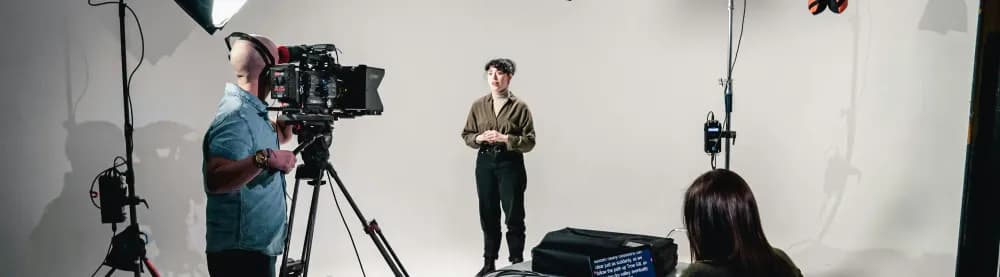
If you decide to go for it, here's how to maximize your chances of success:
Keep It Short
Aim for 60-90 seconds maximum, ideally no more than 2 minutes. Most experts recommend videos between 30 seconds and 2 minutes as most effective. Remember, if it's too long, you risk losing the recruiter's attention.
Structure It Like an Elevator Pitch
- Introduction (10-15 seconds): Name, current role, years of experience, and industry
- Why this role (20-30 seconds): Your genuine interest in the company and position
- Key accomplishments (30-40 seconds): 2-3 specific achievements relevant to the role
- Call to action (10-15 seconds): Invite them to review your full resume or schedule an interview
Ensure Professional Quality
- Lighting: Film in a well-lit space with natural light or invest in a ring light
- Audio: Use a decent microphone or ensure your smartphone audio is clear
- Background: Clean, professional, uncluttered setting
- Framing: Stable camera, eye-level angle, and professional framing
- Attire: Dress as you would for an in-person interview
Script It, But Don't Memorize
Write out key points but don't memorize lines word-for-word. You want to sound natural and authentic, not like you're performing. If you need five hours of takes to get a decent video, it probably isn't worth it.
Show, Don't Just Tell
If applicable, incorporate brief clips of your work, portfolio pieces, or testimonials. This is especially valuable in creative fields.
Always Include a Traditional Resume
Never send only a video. Always provide a downloadable PDF resume alongside your video. Include a link to your video in your traditional resume, cover letter, or LinkedIn profile.
Choose the Right Platform
- Host on LinkedIn for a professional audience
- Use a private YouTube or Vimeo link that you can include in applications
- Consider professional platforms designed for video resumes if the company uses them
Test Before Sending
Watch your video multiple times. Ask trusted friends or mentors for feedback. Check that it looks professional on different devices.
The Bottom Line
The future of hiring is undoubtedly digital, with video playing an increasingly important role. But that role is primarily in employer-led video screening and AI-powered interviews, not candidate-created video resumes. With 72% of companies now using AI in their hiring processes and 54% of job seekers having experienced AI-led interviews, the focus has shifted to how companies use video technology rather than how candidates create it. Focus your energy on optimizing your traditional resume, tailoring it to each job, and building a strong online presence. If you have the skills, resources, and a suitable target role, a video resume can be the cherry on top, but it's rarely the cake itself.
Looking for a job that matches your aspirations and skills? Join TieTalent today. Our platform matches professionals with companies that value what you bring to the table, including those seeking talents who know how to navigate modern hiring processes effectively.
Author

Antonio Aguilar Geronazzo
Marketing Manager - TieTalent
As the Marketing Manager at TieTalent, Antonio Aguilar is known for his adaptability and innovative approach. Having spent over 20 years in various industries, he contributes a broad spectrum of valuable insights. Antonio’s deep understanding of diverse markets and consumer needs enables him to create fresh and effective marketing strategies. He excels in combining his expertise with real-world insights to create marketing approaches that are not only effective but also genuinely connect with people. His articles, recognized for their insightful information and reliable references, have been key in forging strong relationships with diverse clients and audiences.